An Active Value context note on Earth System Observation needs and related COP31 proceedings
In September, we learned the state of Earth’s energy imbalance, and ongoing energy production trends, mean we will breach the 1.5ºC threshold for dangerous global heating, possibly before 2030. This means risks, impacts, and costs, will proliferate, and will be embedded throughout local, regional, and global webs of economic activity. Life is going to get more challenging, in political and economic terms, and for human beings in our immediate surroundings.
The UNEP report Limiting Overshoot – Navigating exceedance of 1.5°C and pathways towards return lays out strategies for halting and reversing global heating, and projects it is possible to do so, but action must start now, on many fronts. For all the climate-related innovation we have seen, we are still not doing most of what must be done.
Today is Earth Information Day, at the opening of the COP31 round of United Nations Climate Change negotiations in Antalya. As part of our support for the Networked Earth System Science Initiative, the Active Value Trust Ratings project, and the Resilience Intelligence Fund, we are calling for a steady increase in public investment and incentives to improve Earth-related information services and the translation of planetary insights into local opportunity.
Four concrete areas of need help to define Earth Information priorities at COP31 and in the months and years to come:
- Insight into geophysical risks in local context, inclulding Early Warning Systems;
- Translation of geophysical insights into actionable priorities;
- Value-chain quality comparison insights;
- Information integrity.
The European Space Agency warns:
The next Status Report of the Global Climate Observing System (GCOS), due in February 2027, will provide evidence that the overall observing and data management system is showing signs of decline for the first time in decades. Emerging risks of failure add to persistent gaps, potentially hindering the ability to detect and understand changes across the atmosphere, ocean and land, at a time when robust climate information is more critical than ever.
This retreat from upgraded investment in systems to assess Earth system dynamics creates a greater risk of high-cost catastrphic events and ill-informed crisis response and prevention measures. At the worst possible time, the tools needed to optimize our investment in planning, preparedness, and response are being weakened. That trend promises to add still greater embedded climate disruption costs into everyday goods and services.
The Networked Earth System Science Initiative (NESSI) is intended to ensure a decentralized approach to Earth intelligence insight generation is able to sustain a more robust reliable flow of relevant scientific data, while supporting more efficient allocations of funding for everyday use and related benefits. Policy-makers should consider methods of integrating and sharing data between Earth system observation platforms, to achieve this goal.
Benefits of such cooperative data production, management, and distribution, would include progress toward:
- Early warning systems for all – The vital, baseline service of ensuring all human beings in all regions, including the most marginal, remote, and vulnerable, have the ability to learn of natural disasters before they strike.
- Translation of geosphysical insights into actionable priorities – To allow local communities, small businesses, farmers, and households, to take relevant action to reduce geophysical risk, enhance operational resilience, and materially improve prospects for enduring health and security.
- Quality comparison capacity to empower consumers – Supporting detailed labeling and provenance tracking, to inform consumers, so harmful practices can be more easily avoided.
- Enhanced information integrity – A more distributed, networked approach allows for more open flows of information, more eyes on the quality of circulating insights, greater transparency and accountability, and reduced opportunity for filtering insights by institutional interest.
In April, the Artemis II mission around the Moon provided vital new data to inform our understanding of the Sun-Earth-Moon system, which structures our climate system and supports our planet’s thriving biosphere. Alongside vital new scientific insights, we also gained new visual clarity for people who had never observed our planet in real time from deep space.

Earth system observation must be detailed, ongoing, robust, and reliable. We cannot afford to allow this complex fabric of planetary dynamics to lose the characteristics that make Earth so uniquely hospitable to human existence.
Institutions large and small, in the public and private sectors, should be able to access usefully translated Earth system insights, just as individuals can access information about current and imminent weather conditions. Each of the layers addressed above—Early warning, Translation, Quality comparison, and Information integrity—is part of the work of ensuring reliable, applicable, actionable insights circulate through all information systems, including those that drive financial and public policy decisions.
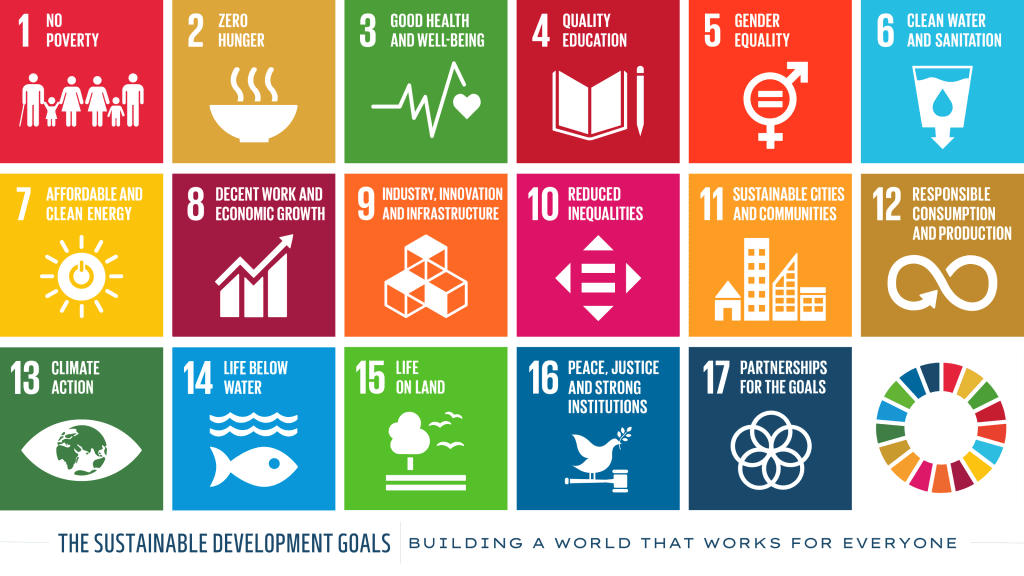
All 17 Sustainable Development Goals touch elements of human experience that benefit from better information about the health and stability of Earth’s climate system and biosphere. We cannot achieve quality education, if people are systematically denied sound and actionable insights into Earth system risk, impact, and cost, let alone good health, reduced hunger and poverty, greater equality, or peace and justice.
As we noted in our recent piece on the value of Nature:
Dignified treatment of the natural world is the most valuable kind of human activity, especially at industrial scale. The financial opportunity inherent in defending Nature is linked to investment in the companies and practices that actually succeed in operating sustainably, in line with the rights, health, and dignity, of the living systems of our planet.
We can achieve clean industry, resilience-building finance, and sustainable human development, if Earth system insights are woven into everyday decisions reliably, seamlessly, and without impeding locally rooted enterprise and cooperative problem-solving.
Job creation moving forward will depend on activities that add value by building resilience; some of this work is hands-on, as in climate-smart agriculture and resilient construction. Some of the work is about information processing and distribution, and will entail skilled teams with understanding of local needs mobilizing resources to enhance safety and opportunity in their surroundings.
We will work to build the systems that make such a future possible, and we urge others to do so as well. There is no time to lose.
