
A national crisis
According to the Environmental Working Group, which closely monitors pollutants and their effects on human health:
Hundreds of everyday products are made with highly toxic fluorinated chemicals called PFAS. They build up in our bodies and never break down in the environment. Very small doses of PFAS have been linked to cancer, reproductive and immune system harm, and other diseases.
For decades, chemical companies covered up evidence of PFAS’ health hazards. Today nearly all Americans, including newborn babies, have PFAS in their blood, and more than 200 million people may be drinking PFAS-tainted water. What began as a “miracle of modern chemistry” is now a national crisis.
Some of the most notorious PFAS chemicals have been linked to:
- Testicular, kidney, liver and pancreatic cancer.
- Reproductive problems
- Weakened childhood immunity
- Low birth weight
- Endocrine disruption
- Increased cholesterol
- Weight gain in children and dieting adults
The U.S. Environmental Protection Agency (EPA) acknowledges that “PFAS are detectable in human cerebrospinal fluid and brain tissue, suggesting they cross the blood–brain and blood–cerebrospinal fluid barriers” and cites “neurotoxicity during development and adulthood” as a serious health concern. It also notes “complex indicators of neurological dysfunction related to motor activity, attention/anxiety, and learning and memory”.
Trump EPA approves pesticide for agriculture & household use that contains PFAS
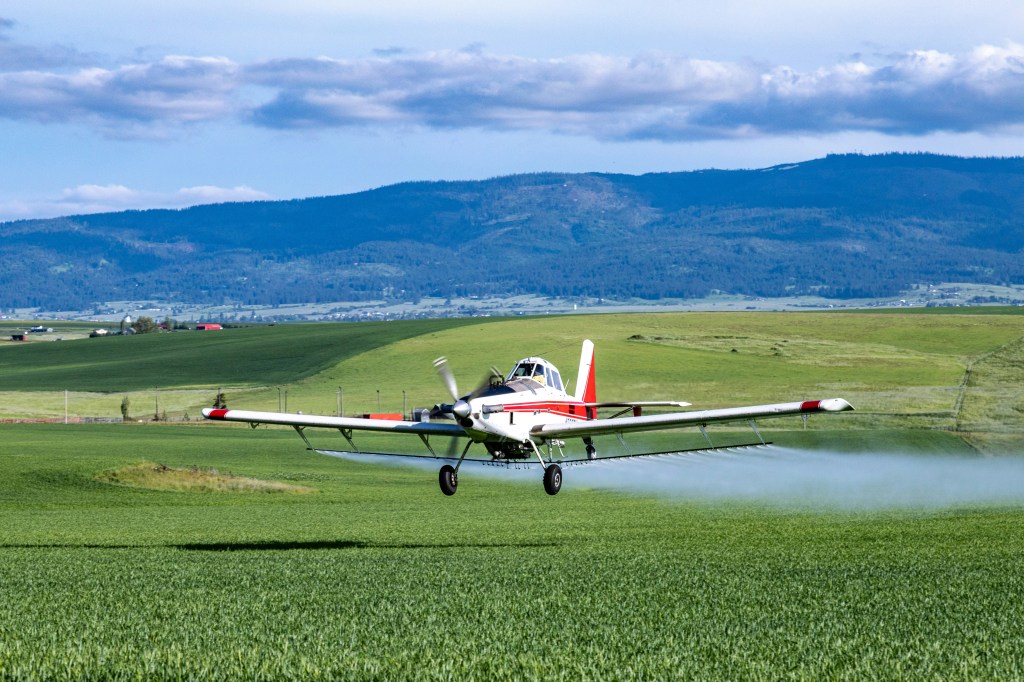
For the fifth time since being sworn in on January 20, 2025, Donald Trump’s new administration has approved for use a pesticide containing PFAS “forever chemicals”, known to pose serious health risks and to spread in the environment, without breaking down. The pesticide is expected to be sprayed on corn, soybean, and wheat crops.
Health and Human Services Secretary Robert F. Kennedy, Jr., had vowed to severely restrict or remove such chemicals from use—a pledge which convinced many to believe in the Make America Healthy Again (MAHA) pitch in the 2024 election. Now, The Guardian is reporting:
The EPA’s move comes just a few months after Maha groups were outraged by the lack of action on pesticides included in the Trump administration’s Make America Healthy Again Commission report. It highlighted the limits of Kennedy’s influence in an administration stacked with former pesticide and chemical industry lobbyists and executives.
The top four positions in the new Trump EPA’s chemical safety office that includes the pesticide division are held by former pesticide and chemical industry lobbyists, and advocates have said the pesticide division has long been captured by industry.
Meanwhile, Wired Magazine reports the Trump administration’s near automatic approval process for AI data centers could “fast-track the approval of new chemicals for use in the US—including new types of forever chemicals—with limited oversight.” The EPA has also closed its Scientific Research Office and is reported to be considering a reversal of the ban on cancer-causing asbestos, at the specific request of Donald Trump.
Scientific review shows U.S. uses toxic chemicals banned in other countries
A much-cited 2019 peer-reviewed study found that:
Many pesticides still widely used in the USA, at the level of tens to hundreds of millions of pounds annually, have been banned or are being phased out in the EU, China and Brazil. Of the pesticides banned in at least two of these nations, many have been implicated in acute pesticide poisonings in the USA and some are further restricted by individual states. The United States Environmental Protection Agency (US EPA) has all but abandoned its use of non-voluntary cancellations in recent years, making pesticide cancellation in the USA largely an exercise that requires consent by the regulated industry.
The effect on human health from many of these banned chemicals is known to be serious, and the risk of their release into the environment is long-lasting, since the chemicals do not break down. They can accumulate in water and soil and in plant, animal, and fungal life forms that come to be food for human consumption.
Virginia residents push back against use of PFAS in biosolids spread on farmland
Evidence is mounting of serious health effects from the incidence of PFAS “forever chemicals” in biosolids from recycled waste used as fertilizer on farmlands. In Virginia, residents are starting to push back, demanding the state do more to regulate and prevent the spread of such chemicals. One alarming reason given for a lack of regulation is that the chemicals are so widespread, many other substances—including agricultural biosolids—would have to be banned to restrict their further spread.
According to reporting from The Virginia Mercury:
Being exposed over long durations and frequent occurrences to PFAS increases the risk of the chemicals interfering with the body’s natural hormones, possibly increasing cholesterol levels, lowering women’ s chances of getting pregnant, affecting the immune system, or boosting the risk of certain cancers.
The hangup for many community members and lawmakers is that Virginia does not test biosolids to see if there are high concentrations of PFAS in them.
The Virginia Department of Environmental Quality does sample rivers and creeks across the commonwealth to look for the presence of PFAS, however, that data dashboard was disabled on the agency’s website during the course of writing this story. A DEQ representative said the dashboard is expected to come back online on Dec. 10.
State lawmakers urge U.S. Senate to help them keep toxic chemicals out of food
Last month, a bipartisan group of 68 Republican and 89 Democratic lawmakers from 30 states, urged Sen. Roger Marshall of Kansas—who serves on the Agriculture, Finance, Health, and Budget committees and who sponsored a new food chemical safety bill—to protect the ability of states to regulate harmful food chemicals, writing:
We support federal efforts to narrow or close loopholes that currently allow new food chemicals into commerce without independently verified safety reviews.
We also support federal action to regularly and systematically reevaluate the safety of food additives which are already in commerce.
However, we urge you to also preserve the power and autonomy of states to protect our consumers and preserve the longstanding collaborative partnership between the federal government and our states.
The Environmental Working group reports that a week earlier:
a coalition of 84 environmental and public health organizations sent a similar letter to each member of the House and Senate, calling on Congress to reject any legislation that would preempt states from adopting and implementing their own food safety laws.
Critics of the Better Food Disclosure Act say the bill will actually roll back disclosure of information about potentially harmful food chemicals and “cement” the “Generally Recognized as Safe” (GRAS) loophole to be used to spread harmful chemicals through the food system. The bill is currently before the Committee on Health, Education, Labor, and Pensions (HELP).
This report was produced by Active Value for The Navigator.
