
The American food system is full of chemical additives, many of which are known to degrade metabolic health, even over a short period of time. A study released in 2018 found that only 12% of American adults are ‘metabolically healthy’. In 2020, when the U.S. saw world-leading rates of mortality and morbidity from COVID-19, diet-related non-communicable diseases were among the most widely documented contributing factors.
According to the California Department of Toxic Substances Control (DTSC):
The U.S. currently has more than 80,000 chemicals in commerce. Of these, approximately 2,500 are “high production volume” (HPV) chemicals, which are manufactured at a rate of more than one million pounds annually, with nearly 45 percent of these HPV chemicals lacking adequate toxicological studies conducted to evaluate their health effects on humans and on wildlife. Further, about 2,000 new chemicals are introduced into commerce annually in the U.S., at a rate of about seven new chemicals a day.
Many in the US assume that the government carefully reviewed the safety of every chemical before it is allowed on the market. However, this assumption is not correct. In fact, most of the 80,000+ chemicals registered for use today have not been tested for safety or toxicity by any government agency. The Frank R. Lautenberg Chemical Safety for the 21st Century Act, passed by Congress and signed into law by President Obama in June 2016, is the first overhaul in 40 years of the Toxic Substances Control Act of 1976, the main nationwide law governing toxic chemicals.
The standard for introducing new chemicals, historically, has tended to be: If a chemical has not been proven to be the culprit for a specific kind of harm, then the companies selling it or repurposing it are likely safe from liability, and so there is nothing stopping that chemical from being introduced into everyday products, including food products.
- There are somewhat stricter standards for foods. For instance, a chemical that might have known neurotoxic effects might be considered safe in certain industrial processes but not as a food additive.
- Over time, well-established chemical food additives, which have been considered safe, might be revealed to create previously undetected risks.
- Medicines go through rigorous testing and years-long approval processes, but can still have serious safety issues identified after formal approval or might be used “off label“, which effectively amounts to experimental use.
Regulators often defer to industry-backed studies that suggest such chemicals are diluted in the environment and so should be assumed to pose negligible risks to any given person’s health.
- This is often a misreading of statistical probability calculations.
- It may be true that if there is one modest, isolated release of a given chemical, the resulting risk to the wider population becomes statistically negligible as the molecules of that toxin spread out in the environment.
- If that chemical is released persistently, however—all day, every day—and embedded in household consumer goods, then the dilution assumption is simply no longer valid.
The ‘Make America Healthy Again’ (MAHA) campaign, touted by the current Secretary of Health and Human Services, Robert F. Kennedy, Jr., focuses in part on reducing the proportion of ultra-processed foods in Americans’ diets. If that goal is achieved, it should improve metabolic and endocrine health for those with improved diets. There are, however, other disruptors of metabolic and endocrine health in the environment, which also impact dietary health.
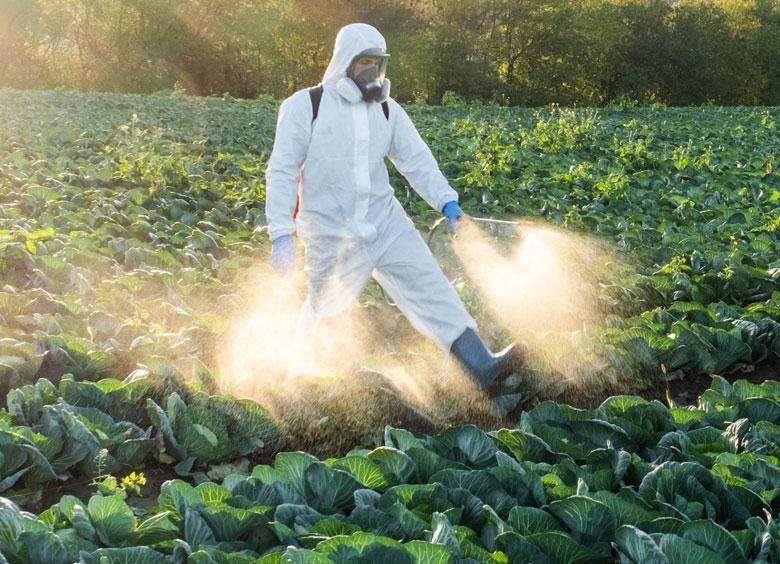
Across the U.S., in home gardens and on farms, known neurotoxins are used as pesticides, to protect plants. This is allowed, because regulatory agencies operate on the premise of the dilution assumption and fail to account for how those chemicals affect people after dispersal.
- For one, they are taken up into the plants themselves, and become part of the biochemical composition of those plants and their fruits.
- Plants also interact with the environment in numerous ways, re-releasing chemicals through respiration, evaporation, and their own life cycle.
- Sprayed chemicals also disperse and recollect in the air, travel onto neighboring farms and gardens, adhere to buildings, and are breathed in by people who did not spray them and do not know they are inhaling them.
- Foods that are produced from the plants that have been sprayed with these neurotoxins and endocrine disruptors can then deliver those toxins to anyone who consumes them.
- Insecticides used to protect crops and garden plants can also have the unintended consequence of causing widespread die-offs of pollinators, which are vital to the survival of the treated plants.
- This can set in motion a vicious cycle, where food production and rural economies suffer, prices rise, more chemicals are introduced, and nature and health are further degraded.
The United States is also starting to wake up to the dangers of plastics, microplastics, and so-called ‘forever chemicals’, which pervade the everyday economy of consumer products. Plastic bottles and bags, containers described as ‘microwave safe’, and fire-retardant chemicals infused into furniture upholstery, are all part of this immense logistical challenge.
The California DTSC notes that ‘Chemicals of Emerging Concern‘ include toxins that can cause cancer, induce neurological damage, disrupt normal hormonal and reproductive function, as well as transgenerational epigenetic effects—changes to DNA that continue in future generations. On perfluorinated compounds (so-called ‘forever chemicals’), DTSC reports:
PFOA and PFOS have a long half-life in the body and bioaccumulate. PFOA, PFOS and other perfluorinated compounds have been identified in groundwater at many locations, including manufacturing sites, and firefighting sites. Although US EPA has not issued a Maximum Contaminant Level (MCL), it has issued a lifetime health advisory of 70 parts per trillion PFOS and PFOA in drinking water supplies.
If the U.S. were to rule out use of high-volume consumer product chemicals, from one day to the next, it would become extremely difficult to maintain the flow of everyday consumer goods, and there would be significant inconvenience and economic disruption. The political environment does not allow for honest discussion of whether this would be the right choice. Instead, Congress has repeatedly authorized regulators to grant long timelines for transitioning away from the use of known toxins.
Increasingly, as federal authorities move too slowly, or decline to act, states and local authorities are facing a need to evaluate whether there is any safe level for certain toxins and, where there is not, to develop strategies for eliminating those chemicals from everyday use. In past cases, such as lead-based paint, asbestos used for insulation, and tobacco products, discovery of serious harm to human health, the perception that liability was limited was proved to be an illusion, and major costs fell on both the public and private sectors.
A world in which the convenience of modern technology and consumer goods were available, where none of these toxins were circulating, and in which food was more likely to be whole, natural, and uncontaminated by chemical additives, in which metabolic health is more commonplace, longevity and wellbeing more achievable, and NCDs are significantly reduced, would be preferable. Those that make the products and distribute the foods that make that world possible carry innately higher value and should be rewarded for doing so.
FEATURED IMAGE

